How The Science of Joy Improves Sales Performance
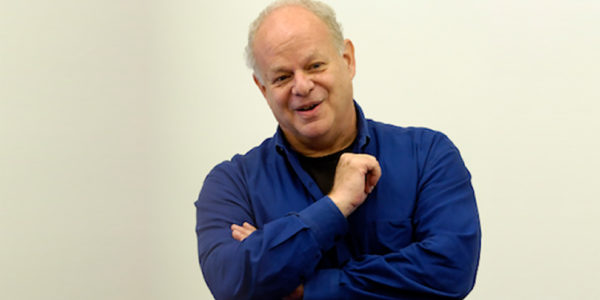
Twenty years ago, I sat down with Martin Seligman for one of the most memorable interviews of my career. At the time, he was leading a quiet revolution inside academic psychology — arguing that the entire field had spent a century looking through the wrong end of the telescope.
His point was blunt: psychology had become an encyclopedia of suffering. Depression, anxiety, phobia, trauma. The diagnostic manuals catalogued everything that could go wrong with a human being. But what about the conditions that allowed people to genuinely flourish? What about joy, meaning, connection, and purpose?
Seligman said something I have never forgotten: “Curing the negatives does not produce the positives.”
That sentence should have been a wake-up call for sales enablement professionals. We train salespeople to manage rejection, handle objections, and survive the grind. We equip them to endure. What we rarely do is teach them how to actually flourish.
Now, two decades after that conversation, a new clinical therapy is proving Seligman right in the most rigorous way possible: in published trials, with real patients, with measurable results. It is called Positive Affect Treatment — PAT — and it offers useful principles for how salespeople sustain motivation and resilience over the long haul.
A Paradigm Shift in the Clinic
PAT was developed through over a decade of research by psychologists Alicia E. Meuret, Thomas Ritz, and Michelle G. Craske. It consists of 15 therapy sessions designed to rebuild the brain’s capacity for joy, motivation, and reward. Unlike conventional therapies that spend the bulk of their time reducing negative feelings — fear, sadness, anxiety — PAT targets the other end of the emotional dial entirely.
“There’s a difference between feeling helpless and feeling hopeless,” says Meuret, who leads the Anxiety and Depression Research Center at SMU. “When you feel helpless, you still have the drive and the will to want to change things. When people feel hopeless, they don’t believe anything will change. That’s what anhedonia can look like, and taking away negative emotions doesn’t fix it.”
That distinction matters enormously. Helplessness is recoverable. Hopelessness is the condition where motivation goes dark — the person stops anticipating reward, stops leaning toward the future, stops believing that effort connects to outcome.
Anhedonia — the clinical term for the inability to feel pleasure — affects nearly 90% of people with major depression. PAT was developed and tested specifically for this population: adults with severely low positive affect, moderate to severe depression or anxiety, and significant functional impairment. The lesson for sales leaders is not to treat their teams as patients. It is to recognize that parts of this dynamic — emotional flatness, disengagement, a muted response to wins that once felt meaningful — can also appear in high-performing salespeople after prolonged periods of stress, rejection, or lost deals. The clinical framework illuminates the territory, even when the context is different.
Meuret frames the intervention clearly: “It’s not enough to take away the bad. Treatment needs to ask: Is this activity meaningful to you? Will it give you joy or a sense of accomplishment? Does it foster connection?”
How PAT Works: Three Mechanisms That Translate to Sales
PAT is built on three practical mechanisms. The research describes them as reward anticipation-motivation, reward attainment, and reward learning. For sales professionals, they translate into concrete daily habits.
Anticipation: What You Expect Before the Call
Most sales preparation focuses on what to say during the conversation. PAT starts earlier — with what you expect before you dial. Clients are guided to imagine positive future events and attend to the positive before engaging in an activity.
For a salesperson, the practice looks like this: instead of thinking I need three meetings today, think one of these calls may help a VP finally remove a bottleneck that has frustrated her team for months. That single mental shift — from quota anxiety to customer impact — primes the brain’s reward circuitry before a word is spoken. The call starts from energy rather than obligation.
Savoring: What You Do After a Good Call
This is where PAT diverges most sharply from standard sales coaching. You are not just taught to have positive experiences. You are taught to fully absorb them. Clients savor positive memories and replay good moments in detail — the therapeutic term for a practice that most salespeople never develop.
After a strong call — a genuine moment of connection, a buyer who leans in, a problem identified with real clarity — take 60 seconds before updating the CRM. Write one line: what went well, what shifted for the customer, and why it mattered. This turns savoring from a vague concept into a micro-practice. Without it, small wins evaporate before the brain has a chance to register them as fuel. With it, the emotional ledger starts to balance.
Seligman observed that “doing a kindness produces the single most reliable momentary increase in well-being of any exercise we have tested.” Savoring is how you keep that increase from disappearing within the hour.
Reward Learning: Connecting Behavior to Meaning
The third mechanism builds a feedback loop. The goal is to notice that when you take a specific action — a thoughtful question, a generous insight, a moment of genuine listening — you feel more capable, more connected, more purposeful. Over time, that connection rewires the relationship between effort and reward.
A practical version of this for sales managers: when a rep is going flat after several late-stage losses, do not only review the gaps. Have the rep identify three recent moments of genuine customer progress, name the specific behaviors that created them, and describe how to repeat them next week. That is a reward-learning loop. It re-anchors the rep’s sense of agency — which is precisely what erodes during a losing streak.
Seligman’s Research and the Numbers
Seligman did not just theorize about optimism — he measured it in salespeople. Working with Peter Schulman, he studied explanatory style among Metropolitan Life insurance agents, a role defined by constant rejection and high attrition. The findings were compelling: agents who interpreted setbacks as temporary, specific, and external — rather than permanent and pervasive — outsold their more pessimistic peers by 37% over their first two years. Optimists also survived at twice the rate of pessimists after one year on the job.
It is worth noting the research context: this was conducted with life insurance agents in a particular era of selling, and explanatory style is one variable among many. But as directional evidence for how a rep’s internal narrative about rejection shapes their persistence and productivity, it remains among the most credible findings in sales psychology. Seligman’s conclusion was direct: “Habits of thinking need not be forever. One of the most significant findings in psychology in the last twenty years is that individuals choose the way they think.”
Operationally, optimistic explanatory style looks like this after a lost deal: This buyer wasn’t ready (temporary) rather than I always lose at this stage (permanent). My pricing story needs work (specific) rather than I’m not good enough for enterprise accounts (pervasive). That is not denial — it is disciplined accuracy about what the evidence shows.
A practical exercise: after a rejection, ask three questions. What is temporary here? What is specific here? What can I improve before the next call? That is optimistic explanatory style made into a repeatable recovery routine.
The Combined Framework
Here is the key insight that PAT adds to Seligman’s earlier work. Optimism training is primarily cognitive — it teaches salespeople to reinterpret setbacks more accurately. PAT is more experiential — it teaches salespeople to actively generate, absorb, and learn from positive moments in the work itself.
The two approaches are not competing. They are complementary. Use optimistic explanatory style to recover from rejection. Use PAT-based practices to make the work emotionally rewarding enough to sustain over time. In short: optimism keeps a salesperson from quitting after adversity. Positive affect gives them something worth moving toward.
Traditional sales methodology also tends to focus heavily on pain: find the problem, amplify the urgency, present the solution. That is effective — but it leaves emotional value on the table for both the buyer and the seller.
PAT suggests adding a second question in every customer conversation: What positive outcome becomes possible if this problem is solved? Not just the absence of pain — but the presence of something better. Pride in front of the executive team. Time freed up for the work that energizes them. The relief their operations manager has been waiting eighteen months to feel.
In a pipeline review, managers can make this structural: ask both Where is the risk? and What positive customer outcome are we helping them move toward? That prevents the team from becoming pain-only sellers and keeps each deal connected to genuine meaning.
Seligman once wrote: “With a firm belief in a positive future, you can throw yourself into the service of that which is larger than you are.” The best salespeople I’ve known in forty years have always understood that. They don’t just close deals. They experience real satisfaction in the transformation they deliver. They savor the customer’s win as their own. They carry that energy into the next call, and the one after that.
That is the principle that should interest every sales leader. A rep who is energized by meaningful work, who savors small wins, who connects daily activity to genuine customer outcomes — that rep is also less anxious, less fragile after rejection, less likely to disengage when the quarter turns difficult. Joy is not a soft variable. It is a resilience variable. And resilience, over a long career, is the only performance variable that truly compounds.
Twenty years ago, Martin Seligman was fighting to be taken seriously inside his own profession. Today, the therapy he inspired is outperforming standard clinical treatment in peer-reviewed trials. The science of joy was always worth the wait.
The question now is whether sales leaders will build it into their culture before their competitors do.
Here is an opportunity to expand your sales leadership acumen: Sign up for the free, virtual Revenue Acceleration Summit June 24-25th. https://bit.ly/4rRTgnR
Get our Enewsletter
Get the latest sales leadership insight, strategies, and best practices delivered weekly to your inbox.
Sign up NOW →