
How WINN.AI Redefines Billions of Sales Conversations
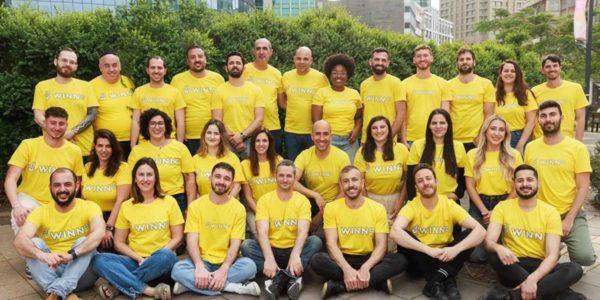
Twenty-seven years ago, I sat across from Marc Benioff as he unveiled a radical idea: Customer Relationship Management didn’t need to live on your server. It could live in the cloud. The software industry thought he was crazy. Today, Salesforce is the worldwide CRM leader. Last week, I had a conversation that gave me that same electric feeling—the sense that I was witnessing the birth of something that will fundamentally reshape the profession of selling.
His name is Eldad Postan-Koren. He’s 37 years old. And he’s not just building a better sales tool. He’s reimagining the entire relationship between human intelligence and machine capability in the most critical moment of commerce: the live customer conversation.
The $18 Million Validation
In February 2026, WINN.AI closed an $18 million Series A funding round led by Insight Partners, Mangusta Capital, and S Capital. The timing tells you everything you need to know about what investors really believe. While AI funding has become brutally selective—down from the $6.9 billion peak of 2021 to just under $4 billion in 2025—WINN.AI stood out by demonstrating something rare in the hype-saturated world of artificial intelligence: immediate, measurable return on investment.
The numbers are staggering. The company tripled its annual recurring revenue in 2025 alone. Since launching in June 2023, it has achieved 30-fold growth. And here’s the metric that made investors take notice: 0% churn among enterprise customers. Zero. When companies like Deel, Cyera, Kaseya, WalkMe, Intercom, and Snyk adopt your platform, they don’t leave.
But the funding round itself—bringing total capital to $35 million since WINN.AI’s 2022 inception—is really just the headline. The story behind it is what matters. Because Eldad Postan-Koren isn’t thinking about sales enablement platforms or conversation intelligence tools. He’s thinking about something far more fundamental: the future of human work itself.
The Philosophy of Responsibility
“I’ve always been attracted to broken systems,” Eldad tells me, his intensity evident even through video. “Not to complain about them—to take responsibility for fixing them.”
That worldview was forged in an unlikely crucible: the Israeli Navy, where he served as a Captain and Commander of Experimental Weapons. “The military teaches you the science of complex systems,” he explains. “You learn that success isn’t about individual brilliance. It’s about creating systems where the right action becomes the easiest action.”
After his military service, Eldad earned a degree in Philosophy, Political Science, and Economics from Hebrew University—a combination that reveals his appetite for understanding not just how things work, but why they work. He moved into the world of startups, becoming the first field salesperson and eventually COO of DreaMed Diabetes, a company using AI to optimize diabetes treatment.
And that’s where he discovered the problem that would consume the next chapter of his professional life.
“I was good at sales,” he recalls. “I loved the human connection, the strategy, the psychology of understanding what someone really needs. But I hated the administrative burden. Every night, I’d spend hours updating the CRM, writing notes, trying to remember what happened in calls earlier that day. It was soul-crushing. The system was forcing me to choose between being present with customers and being compliant with process.”
Most salespeople would just grumble and move on. Eldad did something different. He took responsibility.
He co-founded WINN.AI with Bar Haleva, a cybersecurity expert, on a deceptively simple premise: What if AI could handle the “science” of the sale—the methodology, the data capture, the process adherence—so the human could focus entirely on the “art” of connection?
The Execution Gap
Every sales leader knows the problem intimately. You invest millions in training. You hire expensive consultants to design the perfect MEDDIC or Challenger or SPIN methodology. You create detailed playbooks. You conduct role-plays. You preach consistency.
And then your reps get on customer calls and… chaos.
They forget to ask about the procurement process. They skip critical qualification questions. They fumble competitive objections. They promise follow-up they won’t remember to deliver. The gap between the strategy crafted in the conference room and the reality of live customer conversations remains stubbornly, expensively wide.
Eldad calls this the “execution gap”—and he believes it’s the single biggest constraint on revenue growth in modern enterprise sales.
“Here’s what I realized,” he explains, leaning forward. “The problem isn’t that salespeople are lazy or incompetent. The problem is cognitive load. When you’re on a high-stakes customer call, you’re managing a dozen things simultaneously. You’re listening for pain points. You’re building rapport. You’re reading body language. You’re thinking about timing. You’re trying to remember your playbook. You’re worried about what to type in the CRM afterward. The human brain can only handle so much.”
His solution? Don’t analyze what went wrong after the call. Shape what’s happening during the call.
The Death of the Post-Mortem
This is where WINN.AI fundamentally diverges from the conversation intelligence tools that have dominated the sales technology landscape for the past decade.
“Most players in this market are passive and retrospective,” Eldad says, his voice taking on an edge. “They record your calls. They transcribe them. They analyze them with AI. And then, a week later, they tell you what you should have said differently. That’s a post-mortem approach. You’re learning from your failures.”
He pauses for effect.
“The era of post-game analysis is over. We don’t analyze the past. We shape the present. We change the outcome while the customer is still on the call.”
Here’s how it works in practice: WINN.AI joins your Zoom, Teams, or Google Meet call as an invisible participant. As the conversation unfolds, the AI monitors the dialogue against your company’s specific playbook—whether that’s MEDDIC, BANT, Challenger, or any of two dozen other methodologies.
In real-time, it identifies what’s been covered and what hasn’t. It provides discrete prompts to the rep. Forgot to ask about budget? The AI reminds you. Prospect asks a technical question you haven’t encountered before? The AI instantly surfaces the answer from your company’s knowledge base. Competitive objection? Battle cards appear on your screen.
And here’s the crucial part: The AI is learning what questions, what objections, what conversational patterns actually emerge in real customer conversations—not the sanitized version from the training manual, but the messy, authentic reality of how buyers actually talk.
After the call? The AI has already captured every relevant detail, mapped it to the appropriate CRM fields, drafted a follow-up email, and created a summary. No typing required. The sales rep can immediately move to the next conversation, or they can spend their time coaching junior team members, or they can actually think strategically about their pipeline instead of drowning in administrative quicksand.
The 73x Miracle
The impact shows up in numbers that make CFOs pay attention.
At Deel, the global HR technology company, CRM fill rates before WINN.AI were an abysmal 1.1%. Think about that. Sales leadership was making strategic decisions based on data sets that captured just over one percent of what was actually happening in customer conversations. They were flying blind.
After implementing WINN.AI, CRM fill rates jumped to 73%. That’s a 73x increase. Suddenly, the entire revenue organization could see reality. And with that visibility came execution: win rates increased 33%, and methodology adoption rose 31%.
“WINN.AI turned our sales qualification framework from a training deck into something reps actually use and follow,” says Frank van der Vinden, Senior Enablement Manager at Deel.
At Kaseya, which deployed WINN.AI across 1,200 sales representatives globally, administrative time dropped 98%. CRM updates that once consumed hours now take 46 seconds. More importantly, when leadership wants to roll out new messaging or strategy, it happens instantly through live playbook updates—not weeks later after the training finally cascades through the organization.
Cyera doubled its CRM fill rate and increased playbook usage by 20%. Nate Sintros, their Revenue Operations Manager, puts it bluntly: “You can’t build a data-driven strategy on manual entry—it’s too inconsistent. WINN.AI automated the capture and turned our biggest blind spot into our most reliable data asset.”
Beyond Sales: The Total Customer Experience Revolution
But here’s where the conversation gets really interesting—and where Eldad’s vision extends far beyond what most people think of as “sales technology.”
“Five years from now, the distinction between sales, customer success, and support will blur,” he tells me. “They’re all really the same thing: structured conversations with customers where organizational knowledge needs to be consistently applied. Right now, we organize around functional silos. But the customer doesn’t care whether they’re talking to ‘sales’ or ‘support.’ They just want a consistent, intelligent, helpful experience.”

Eldad envisions WINN.AI becoming the foundational execution layer for every customer-facing conversation in the enterprise. SDRs qualifying leads. Account executives running discovery. Customer success managers conducting quarterly business reviews. Support engineers troubleshooting technical issues. Even HR conducting interviews or employee check-ins.
“Anywhere there’s a structured conversation with high stakes and cognitive load—that’s where real-time AI guidance creates massive value,” he explains. “We’re not replacing humans. We’re giving them a superpower: perfect recall, instant access to knowledge, and freedom from administrative drudgery.”
This is the vision that reminded me of Marc Benioff in 1999. Benioff wasn’t really selling CRM software. He was selling a future where companies could know their customers better, move faster, and compete more effectively. The cloud was just the mechanism.
Eldad isn’t really selling a sales coaching tool. He’s selling a future where billions of customer conversations—across every industry, every geography, every function—are fundamentally better. Where the people having those conversations are more present, more knowledgeable, more helpful. Where companies can execute their strategy consistently at massive scale. Where the “science” of methodology and the “art” of human connection finally work in harmony instead of opposition.
The Authenticity Imperative
I push him on a concern that’s been nagging at me throughout our conversation: In an age where AI is increasingly “breathing its own exhaust”—training on synthetic data and reinforcing mediocrity—how does he ensure WINN.AI amplifies excellence rather than automation?
His answer reveals the depth of his thinking about the human-AI partnership.
“This is critical,” he says. “We’re not teaching AI to have conversations. We’re teaching AI to recognize what makes human conversations successful. There’s a massive difference.”
WINN.AI analyzes the conversations of top performers to identify the specific behaviors, questions, and responses that correlate with winning outcomes. Then it helps other reps recognize those same moments and opportunities in their own conversations.
“We’re not creating synthetic sales people,” Eldad emphasizes. “We’re amplifying authentic human excellence. The AI learns what winning sounds like when real humans do it well—and then helps everyone else reach that level.”
This commitment to authenticity extends to the product design itself. The AI is built with what Eldad calls “the discipline of discretion”—knowing when to stay silent.
“Sales reps are drowning in tools competing for their attention,” he notes. “The last thing they need is another chatbot screaming at them during calls. Our AI fades into the background. It only steps forward when it’s truly necessary—a missed playbook item, a direct question from the prospect, a competitive situation where guidance would genuinely help. Context-aware assistance, not constant noise.”
The Leadership Laboratory
Eldad’s commitment to developing leadership—particularly in young people—runs deeper than just his sales technology work. He co-founded Shavot, an NGO focused on teaching leadership and goal-setting to girls. He’s also behind The Sky is the Limit, another social impact initiative.
“I believe that sales is one of the most powerful life skills you can develop,” he says. “Whether you’re fundraising for a nonprofit, hiring for your team, pitching an idea to your board, or just advocating for yourself—you’re selling. Most people never learn these skills systematically. I want to change that.”
This philosophy of “taking responsibility” for broken systems—whether in sales technology, youth leadership, or diabetes treatment—defines Eldad’s approach to entrepreneurship. He’s not building products for the sake of innovation. He’s identifying fundamental human challenges and creating systems that make the right action the easiest action.
The 2030 Vision
As our conversation winds down, I ask Eldad to paint a picture of 2030. What does the sales profession look like when real-time AI guidance is ubiquitous?
“The role evolves into what I call ‘High-Trust Orchestration,'” he responds. “The AI ensures perfect methodology compliance, instant knowledge access, complete data capture. The human focuses entirely on trust, rapport, emotional intelligence, strategic thinking. You’re not splitting your attention between process and people anymore. You’re just present.”
He leans back, eyes bright with possibility.
“Imagine a world where every salesperson—from the brand-new SDR to the VP of Enterprise Sales—has instant access to the collective wisdom of your entire organization. Where language barriers disappear because the AI can translate and guide in any language. Where global consistency doesn’t mean robotic uniformity, but rather consistent excellence executed with individual personality and style.”
“We’re going to touch billions of sales conversations. And every single one of them is going to be better—more helpful to the buyer, more effective for the seller, more valuable for the company. That’s not just a better sales tool. That’s a better way of doing business.”
The Benioff Parallel
As I end our call, my mind keeps returning to that conversation with Marc Benioff in 1999. At the time, most people thought cloud CRM was a curiosity—interesting, perhaps, but not a fundamental shift. They were wrong.
Eldad Postan-Koren has that same quality Benioff had: absolute clarity about a future that most people can’t quite see yet. And the conviction to build it even when the vision seems impossibly ambitious.
The difference is that Eldad isn’t just moving software to a different deployment model. He’s reimagining the fundamental relationship between human expertise and machine capability at the exact moment that relationship matters most: when you’re trying to help a customer solve a problem.
WINN.AI’s $18 million Series A isn’t just validation for a promising startup. It’s a down payment on a future where billions of sales conversations become fundamentally better. Where salespeople are freed from administrative drudgery to focus on what they do best: building relationships, solving problems, creating value.
Where the gap between strategy and execution finally, definitively closes.
The revolution won’t be televised. It will be real-time. And Eldad Postan-Koren is leading the charge.
Get our Enewsletter
Get the latest sales leadership insight, strategies, and best practices delivered weekly to your inbox.
Sign up NOW →
Popular Articles
- Bridging the Sales-Marketing Divide: How AI Transforms Your Revenue Team
- Customer Obsession Will Define the AI Era But Human Connection Is Still Sales' Greatest Advantage
- Key Contact Center Trends to Watch in 2025: Navigating Compliance, Technology and Customer Acquisition
- Disrupting Sales Training: A New Dawn in Personalized Learning